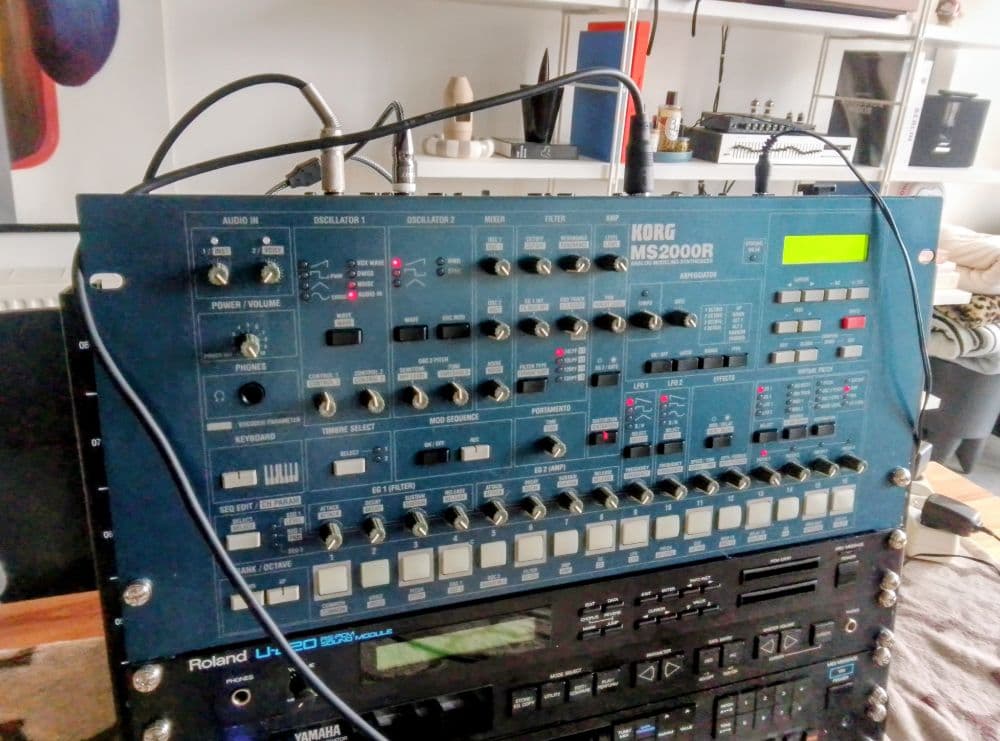
Korg MS2000 polyphonic synthesizer - rack unit version - preamp only - 2000s
Experimental Capture
NAM

morenoteslesstalk
11mo
Description
Makes and Models
Korg MS2000 rack 2000sTags
16-band vocoder4-voice polyphony6-pattern arpeggioadsr envelopesanalog-style modelingarpeggiatorband-pass filterbass synthbuilt-in effectschorusclassic synth texturesclean capturedelaydistorted capturedistortiondualsplit-timbreearly 2000s syntheqexpressive tonesexternal audio processingfilter slopesflangerflexible synthhigh-pass filterkorgkorg ms2000lead synthlfo modulationlow-pass filtermicrokorg siblingmidi controlmodulation matrixmultimode resonant filternamnam capturenam synth profilenoise per voiceopen vcaopen vcfpad synthphaserpolyphonic synthpreamppreamp saturationrack unitsequence synthstudio synthsynthsynthesizertwo oscillatorsversatile synthesizervirtual analog synthesizer
Preview
0:00 / 0:00
Model
IR
Input
Powered by
NAM Models
Each model captures the gear at specific knob settings.
A2-FullESR: 0.1326
A2-LiteESR: 0.2729
500 Epochs
Convert
Captured on
A2-FullESR: 0.0068
A2-LiteESR: 0.0464
500 Epochs
Convert
Captured on
2 Comments

This is interesting piece of equipment But i love it Man definetly gonna try it on Some Prophet V Presets i made
1
License: T3K
Users may download and use the data file in software and publish the resulting outputs without royalties or restrictions. However, they may not upload, republish, or distribute the data file without the author's permission.More Tones From @morenoteslesstalk
Works with TONE3000
Browse and play TONE3000 tones directly in these plugins, pedals and amps.Plugins


NEW TO TONE3000?
Discover hyper-realistic digital models of iconic gear, including the Fender Twin Reverb, Vox AC30, Marshall JCM 800, and thousands more. Getting started is easy—and free!