Announcing A2: The Next Generation of Neural Amp Modeler
TONE3000 is partnering with the creator of Neural Amp Modeler, Steve Atkinson, to build the future of NAM so it's more efficient, works on more devices, and sounds even better. Launching March 2026.
Since Neural Amp Modeler (NAM) launched as an open source project in 2019, it has sparked a rapidly growing ecosystem of musicians, hardware manufacturers, and software developers who have embraced what many consider the most accurate neural modeling technology available. But as with any groundbreaking technology, there's room to push further.
Today, we're announcing Architecture 2 (A2): the next evolution of NAM, developed in partnership with Steve Atkinson. This next-generation architecture will address two core opportunities: improving capture accuracy and reducing processing requirements so captures work on an even wider range of hardware devices.
If you're interested in running Neural Amp Modeler natively on your hardware or plugins, we'd love to hear from you at support@tone3000.com. Your technical requirements (processing constraints, memory limitations, latency budgets) will directly inform A2's final design. A2 will launch in March 2026 so act fast!
What is A2?
A2 (short for "Architecture 2") is a redesigned neural network architecture that will become the new default for all NAM captures, built from the ground up to deliver better sound quality while using fewer computational resources.
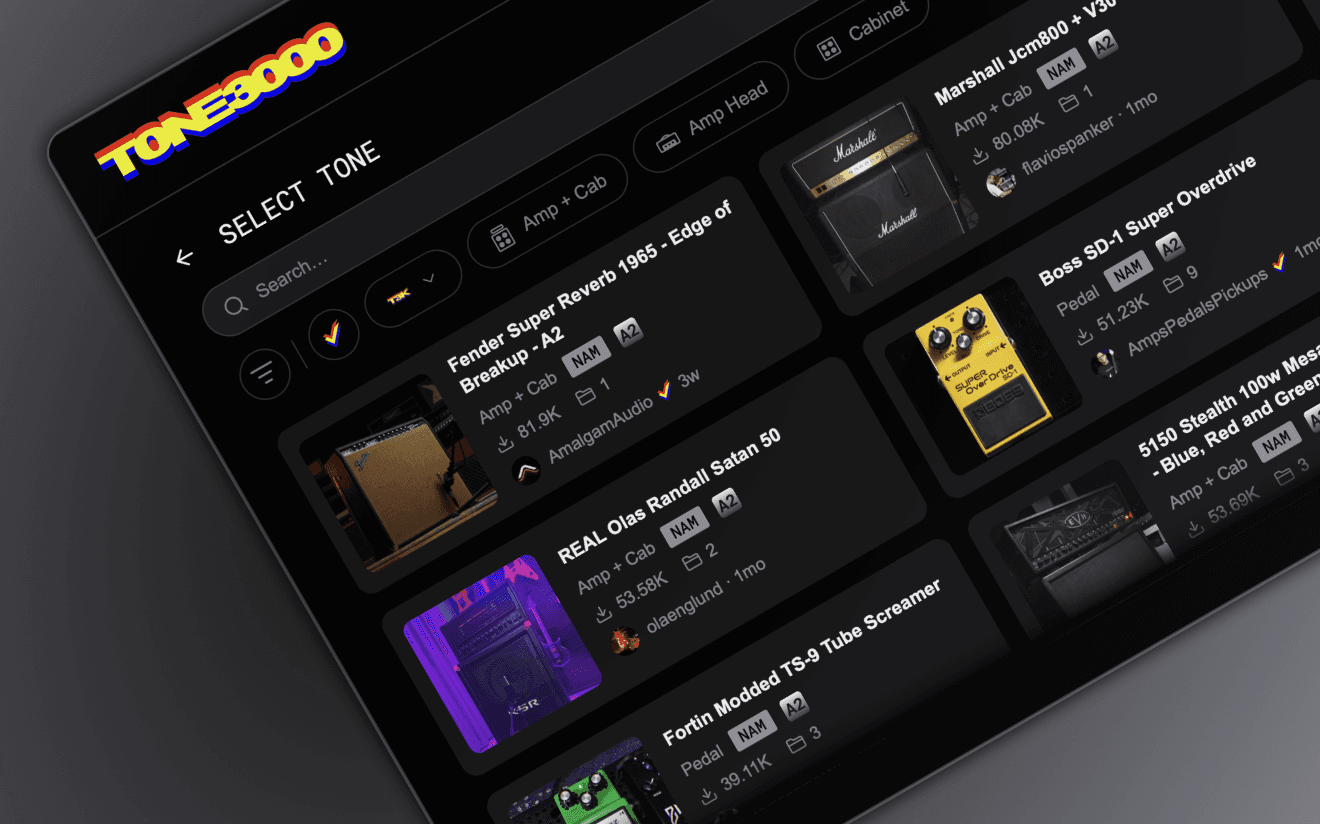
The current NAM architecture (now called A1) has proven remarkably versatile, running on everything from personal computers to embedded hardware like the Darkglass Anagram and Dimehead Pedal, and even in web browsers on TONE3000. A2 takes what we've learned from years of real-world deployment and optimizes the technology for the next generation of NAM-powered products.
Why A2?
The original A1 architecture was designed before anyone realized how broadly NAM would be adopted. Today, NAM runs on all three major operating systems, single-board computers like Raspberry Pi, embedded systems in guitar pedals, websites and more. It's become an industry standard, which means any changes need to be made thoughtfully and collaboratively.
How will A2 be better?
Better modeling accuracy: A2 will improve how NAM represents dynamics, gain structure, frequency behavior and transient handling, with optimization for capturing an even wider array of gear types (like compressors). The result will be captures that sound closer to the real thing and feel more satisfying to play.
Lower CPU requirements: At 13.8 thousand parameters, the A1 standard model is computationally intensive, especially for embedded hardware in multi-fx pedals and floor units. A2 will deliver comparable or better accuracy while being more efficient, enabling NAM to run natively on more devices.
Slimmable NAM: A2 will introduce slimmable neural models, a breakthrough that allows a single NAM capture to adapt its processing requirements on the fly. The same NAM profile can run at full quality on your desktop DAW, then scale down automatically for your guitar pedal or floor unit without requiring multiple versions.
All TONE3000 tones retrained for A2
When A2 launches, we'll retrain every single NAM profile uploaded to TONE3000 to support the new architecture. Hundreds of thousands of tones, from vintage Fender amps to modern high-gain rigs, classic bass preamps to boutique pedals, will be available as A2 models from day one.
Both A1 and A2 versions will remain available, giving you flexibility to use whichever works best for your workflow and hardware.
All A2 models will be accessible through the TONE3000 API, our developer platform that lets hardware manufacturers and plugin developers integrate our entire library directly into their products. The API provides instant access to our community's constantly growing universe of tones with no manual downloads or no local storage management– just seamless integration.
If you're building NAM-compatible hardware or software, the TONE3000 API lets your users browse, preview, and load tones directly from within your product. You can get started here: https://www.tone3000.com/api
Our commitment to open source
A2 will be completely open source, continuing NAM's tradition of transparency and community-driven development. The architecture, training code, core DSP code and all related tools will be freely available for anyone to use, study, and build upon.
This open approach has been fundamental to NAM's success, enabling an ecosystem of hardware manufacturers, plugin developers, and software engineers to push the technology forward in unexpected ways. We're also open-sourcing the evaluation datasets and methodologies used to develop A2, so the broader community can validate our results and build on this work.
TONE3000 backs A2
TONE3000 is fully funding the development of A2. Our engineering team, led by Woodbury Shortridge (co-founder and CTO) and our latest team member João Felipe Santos, is actively collaborating with Steve Atkinson on this new architecture. For users, this means faster progress and an even more reliable platform. For manufacturers and developers, it delivers a professional development structure and long-term roadmap that ensures NAM works seamlessly on devices, plugins, and apps.
Help shape A2
We're actively seeking input from hardware manufacturers, plugin developers and software engineers. Your technical requirements (processing constraints, memory limitations, latency budgets) will directly inform A2's final design.
Here's how to participate:
- Stage 1 (Now - Early February 2026): Contact us at support@tone3000.com and we’ll collect your requirements.
- Stage 2 (February 2026): Test preliminary A2 models on your hardware and provide CPU usage data.
- Stage 3 (March 2026): A2 launches to the world!
What this means for musicians
A2 takes the next major step in democratizing great tone. Your tones can move seamlessly from the studio to your amp, pedalboard, plugin, or phone without compromise. A $5,000 vintage amp once locked in a studio can now live as a high-quality neural model anywhere you make music, making world-class tones accessible to artists around the globe.
Discover more
The technical evolution behind Slimmable NAM