Slimmable NAM: The Future of Neural Amp Modeling | TONE3000
Discover how Slimmable NAM is revolutionizing guitar tone with scalable AI models for any hardware. Learn about the future of Neural Amp Modeler at TONE3000.

Neural Amp Modeler (NAM) has already reshaped the landscape of digital guitar technology by giving musicians, audio engineers, and music technology gear manufacturers access to an open-source, community-driven ecosystem of stunningly accurate neural amp models. Now, a new breakthrough, called Slimmable NAM, promises to push that ecosystem even further. Currently in development by Steve Atkinson, the creator of NAM, Slimmable NAM introduces a more adaptive, scalable, and hardware-friendly version of the NAM architecture.
Designed to meet the needs of developers building digital guitar pedals, plugins, mobile apps, and embedded systems, Slimmable NAM allows a single neural amp model to operate at multiple computational scales. In practical terms, it lets developers (and end-users) run the model at full fidelity when hardware resources are plentiful, or reduce the model size when integrating it into DSP-limited devices. This presents a massive opportunity for gear manufacturers looking to enter the NAM ecosystem, especially as demand for NAM-compatible pedals and processors continues to grow.
The best part: TONE3000 is working with Atkinson to ensure that Slimmable NAM will remain fully backwards compatible with all currently available NAM hardware players, DAWs, and plugins. Existing users won’t need to change anything and hardware partners who are already supporting NAM won’t face any technical disruptions with their existing products when Slimmable NAM is released.
What “Slimmable NAM” Actually Means
Traditional NAM models have a fixed computational footprint, which are currently offered in four different file formats: Standard, Lite, Feather, and Nano. Each of these files are optimized for specific use cases, with Standard offering the highest fidelity and requiring the most DSP usage. As you go down the list of NAM file formats, both the level of fidelity decreases along with the amount of DSP they require. Once trained, the model’s size and runtime cost remain constant. While this delivers a wide array of options based on use case, it limits the types of devices that can run the models efficiently and requires people creating NAM captures to model them in a format specifically tailored to the DSP requirements of the player they’re using them with.
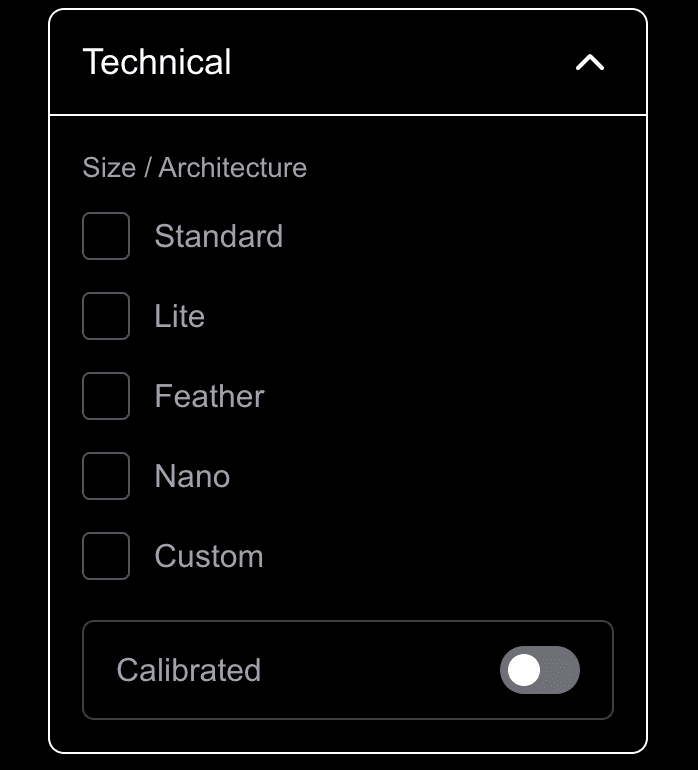
The current architecture offers creators options for outputting NAM models optimized for specific use cases.
Slimmable NAM introduces a new architecture where a single model can operate at multiple “widths,” meaning the number of channels within each neural network layer can dynamically scale. At full width, Slimmable NAM behaves like a Standard NAM capture, offering the highest quality model. But when scaled down, the model reduces its runtime cost proportionally by using a subset of the available weights, allowing devices with tighter CPU or DSP budgets to run the same model at a lighter configuration. Developers can think of this as variable bit-rate audio, except for neural network computation: the content stays the same, but the computational load adjusts.
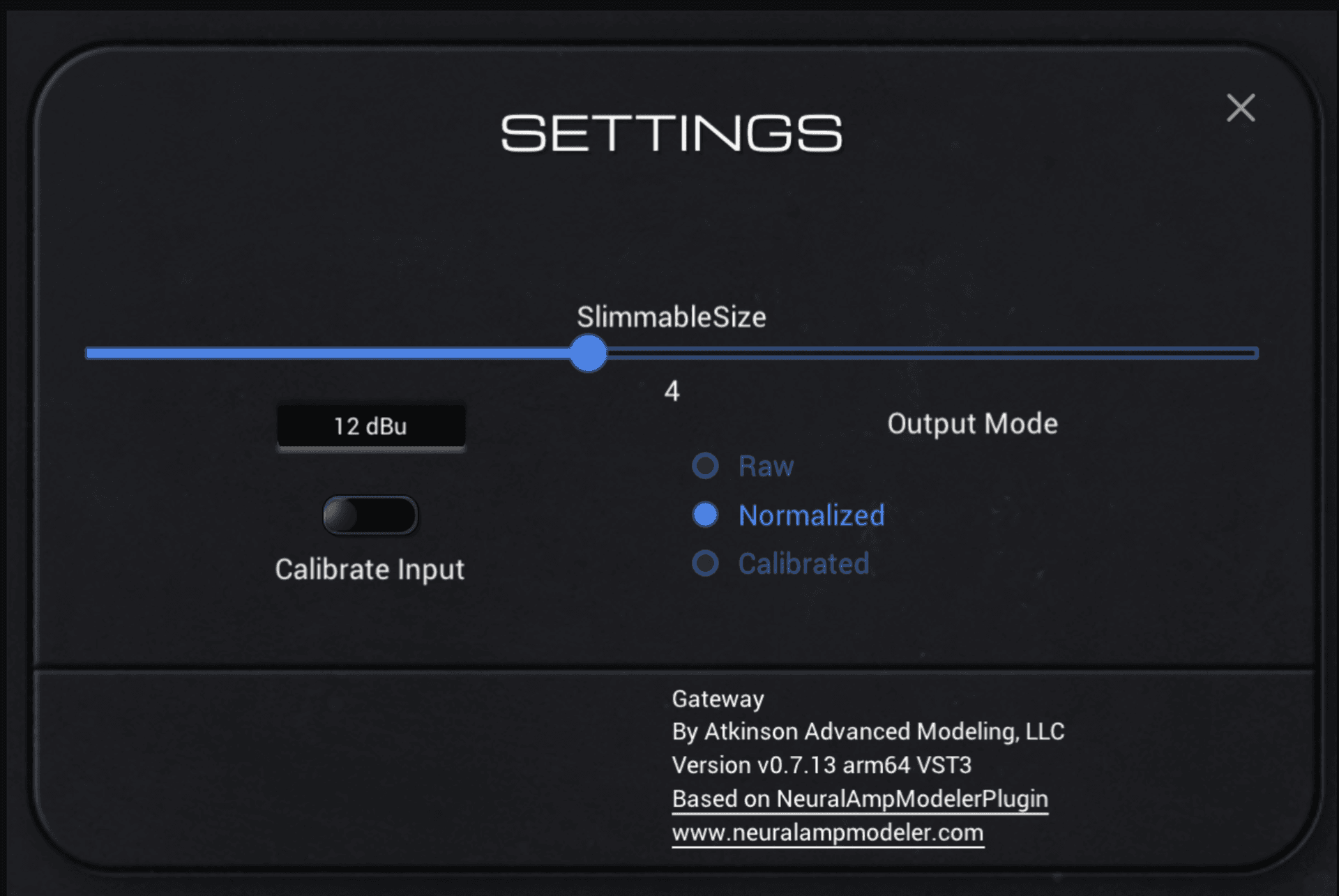
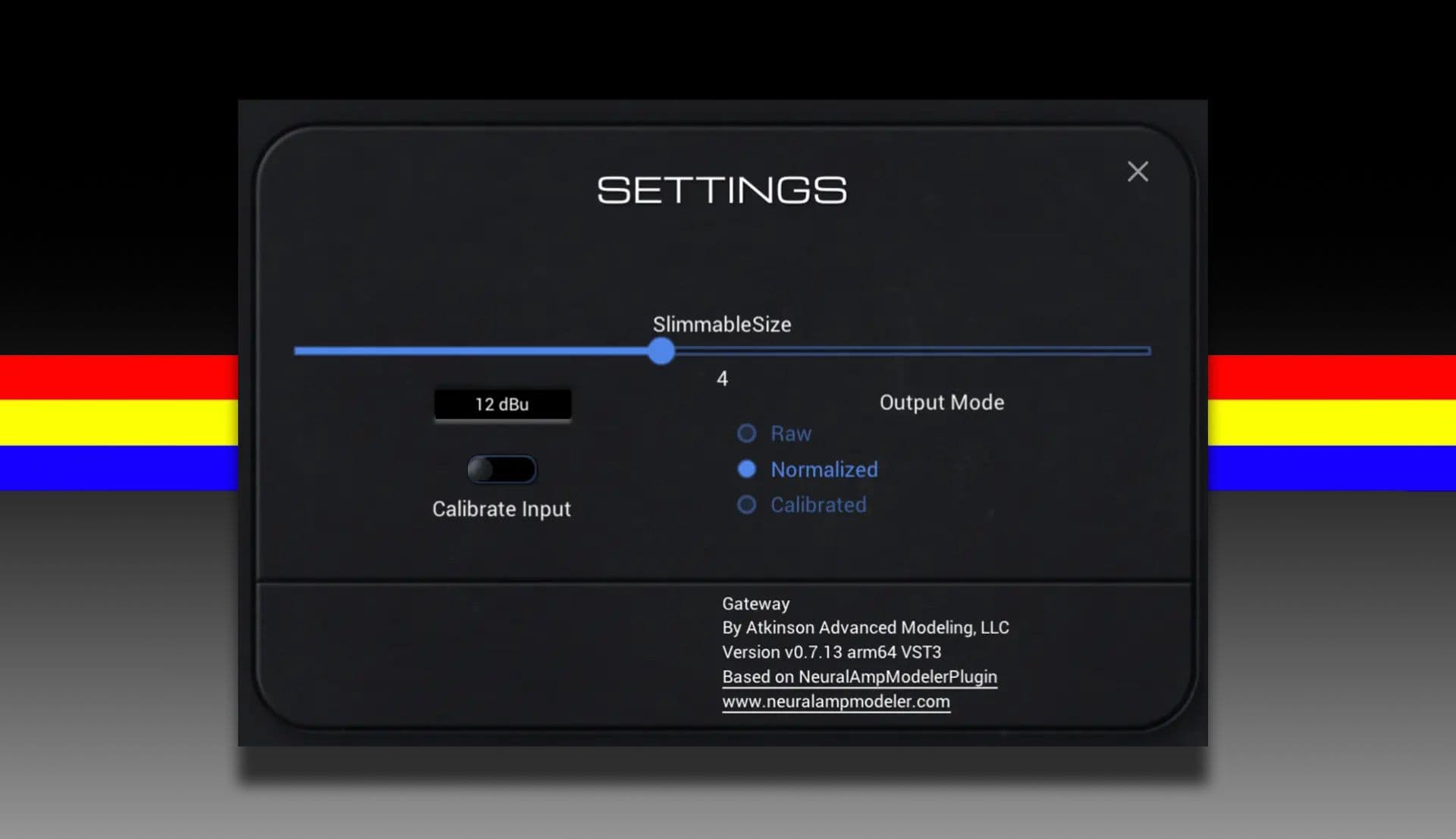
This mockup of a proposed settings page on the Neural Amp Modeler plugin shows the ability to slim the loaded network on the fly.
Why This Matters for Hardware Manufacturers
For companies exploring NAM-compatible hardware, Slimmable NAM solves one of the key challenges of running AI-based amp sims on embedded hardware: balancing tone quality with DSP constraints.
To run Standard NAM captures, manufacturers may need to either upgrade processors (at potentially heavy cost), accept reduced features, or create their own proprietary software that converts NAM files to something more manageable for their hardware. Slimmable NAM changes that equation by allowing a single NAM model to be deployed in a scalable, unifying format.
This means that:
- A high-end desktop plugin or pro-quality hardware device can run the model at full size for maximum accuracy.
- A mid-range pedal can run a lighter configuration with minimal change to the sonic character.
- A budget-friendly pedal with inexpensive processors can run the same model at an even slimmer profile, but still retain an acceptable level of quality of the core tone.
Instead of releasing multiple versions of NAM files for different devices, Slimmable NAM allows manufacturers to support a unified file format that’s tailored to the capabilities of their hardware. This also empowers developers to prioritize features (like lower power consumption, or longer battery life) without leaving the NAM ecosystem.
Backwards Compatibility and Zero Disruption for Existing Products
One of the most important aspects of Slimmable NAM is that it does not break the current ecosystem. Existing NAM models will continue to work as-is. Current NAM-compatible players, plug-ins, or pedals will not need firmware changes to maintain functionality.
Slimmable NAM simply adds a new capability for future-leaning devices and software. Hardware developers implementing NAM compatibility today will remain fully future-safe: devices that support NAM now will support Slimmable NAM models later, with no architectural shift required.
This means manufacturers can confidently continue building NAM-compatible products without worrying about obsolescence or fragmentation.
The Technical Breakthrough Behind Slimmable NAM
At the core of Slimmable NAM is a training mechanism that optimizes a neural network to operate at multiple widths from the beginning. Instead of training a single fixed-size model, Slimmable NAM trains a family of weights that share structure across multiple width configurations.
In Atkinson’s research paper, Slimmable NAM is shown to outperform traditional pruning or model-compression techniques precisely because it is designed from the ground up for multi-width operation. Pruned networks typically degrade significantly in quality when aggressively reduced. Slimmable NAM is trained to minimize this degradation, ensuring the model still performs at a high level even when slimmed.
An Opportunity for Manufacturers to Join a Rapidly Growing Ecosystem
NAM has become the most viral sensation in guitar technology today, with hundreds of thousands of amp models shared freely on TONE3000. Slimmable NAM amplifies that opportunity for hardware companies, making it easier than ever to design NAM-compatible products at any price point.
Manufacturers would now have a clear path to developing:
- Entry-level NAM-compatible pedals
- Mid-tier DSP-driven processors
- High-end studio units
- Compact USB interfaces with onboard amp modeling capability
- Mobile DSP accessories
By embracing Slimmable NAM early, hardware companies can position themselves at the leading edge of a rapidly expanding category. Developers no longer need to choose between tone quality and processing cost; the NAM format can now scale to meet the needs of multiple hardware tiers.
A Unified Future for NAM
Slimmable NAM represents a major evolution in how amp modeling can work across devices, and it does it without disrupting existing workflows or fragmenting the ecosystem. It expands possibilities while keeping NAM’s open-source mission intact: empowering musicians and developers with transparent, community-driven tools.
For hardware and software manufacturers, the message is clear. NAM is no longer just a plugin, it’s a platform. And Slimmable NAM makes that platform ready for everything from ultra-light DSP pedals to flagship digital processors.
The future of guitar tone is already here, but it won’t just be powered by some generic AI. It will be powered by Slimmable NAM and available for free on TONE3000.
TONE3000 is a leader in the development of neural amp modeling for audio. For more information on how to integrate Slimmable NAM into your products, or for becoming a development partner, please contact us at support@tone3000.com.
Discover more
Announcing A2: the next generation of NAM