Improving Capture Quality on TONE3000
We're updating our guidelines and policies to raise the quality of NAM captures and IR's on TONE3000.
"NAM and Tone3000 are actually what you call a breakthrough. Some constructive criticism. The only problem I see with Tone3000 in general is the amount of bad captures out there."
– @UndeadSasuke34 on YouTube
One of the most common complaints we hear about TONE3000 is inconsistent quality. While the library contains many well-documented, accurate captures, it also includes poorly documented packs, low-quality captures, and captures of software presented as analog gear.
This will always be a challenge. TONE3000 is a community library built on user-generated content, with more than 700,000 captures and new ones shared every day.
Maintaining consistent quality at that scale is a challenge. Today, we’re taking another step toward improving the quality of tones by updating our guidelines and how they’re enforced.
What's Changing
We've created new Tone Sharing Guidelines, including an updated Tone Sharing Policy. They define what can be shared publicly and how tone packs should be structured and documented.
If you share captures, please read both in full. These are the three main changes taking effect today.
Plugin captures are no longer allowed
Previously, we allowed plugin captures in limited cases, such as when they were part of an analog signal chain or shared as a "custom" tone. Those exceptions have now been removed.
Captures of plugins, amp sims, digital effects from multi-FX pedals, and other software may not be shared publicly on TONE3000.
This policy is intended to prevent software piracy by stopping software products from being captured and redistributed as substitutes for the original products.
One pack, one piece of gear or signal chain
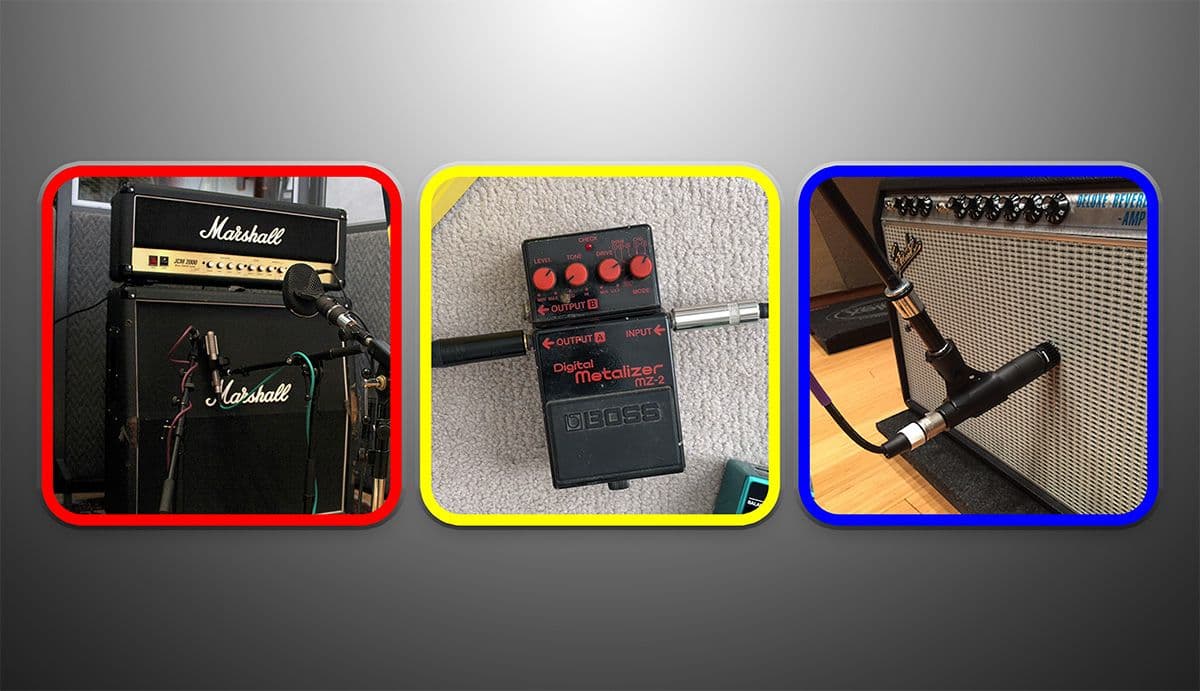
A tone pack is a collection of NAM captures or impulse responses. Each pack must contain captures of one piece of gear or one signal chain.
Different settings of the same piece of gear or signal chain can be included in the same pack. Different pieces of gear or separate signal chains should be uploaded as separate packs.
This helps TONE3000 accurately label, categorize, filter, and surface tones both on the website and through the TONE3000 API.
For example, if a user searches for a specific amplifier, the pack title, photo, metadata, and captures should all refer to that amplifier.
Please don't organize packs around genres, artists, or albums. We may introduce a "collections" feature in the future to group multiple packs around these themes.
We’re raising our photo standards
Our photo policy has not changed, but we’re building automated systems to enforce it more consistently moving forward. More on this below.
As a reminder, photos must accurately show the actual gear or signal chain used to create the capture.
- Use a photo you personally took of the gear you captured.
- Take the photo during or around the capture process.
- Use a clear, high-resolution, square image.
- For amp + cab captures, include the microphone in the photo.
- Do not use stock photos, images from the web, logos, graphics, or heavily edited photos.
- Do not use AI-generated images or AI to modify the contents of a photo.
Tone packs with compliant photos will receive greater visibility across TONE3000. Packs with non-compliant photos may be set to private or have the photo removed. Packs without photos may receive less visibility.
Next Steps
These changes take effect today and apply to both existing and new public uploads.
If you share tones publicly, please read the full Tone Sharing Guidelines and update any existing public tone packs that do not comply. Otherwise, set non-compliant packs to private.
Enforcement
We're developing automated checks to review public captures for compliance. Captures that do not follow the policy may be set to private.
We're also introducing a three-strike policy. Accounts that receive three policy violations may be suspended or banned.
Until automated moderation is fully in place, users can report potential violations by selecting Report Tone at the bottom of a tone page.
These changes are intended to make the TONE3000 library more consistent, easier to search, and easier to understand.
Thank you to everyone who creates and shares tones on TONE3000.