
Preview
0:00 / 0:00
IR
Model
Input
Powered by
Impulse Responses
Each impulse response is a snapshot that captures different mic placements, speakers, room positions, reverb settings etc.
6 Comments
Hey man, love your IRs
Would you be open to team up with the user plumber and create IRs of every speaker you've got, sweetspot position and possible with the same mic(s) on each different speaker? Maybe an updated, concise IR pack of sorts. Would be the breasts 🤘🏻
If not, keep doing what you do
0

(edited)
Hey man, first of all, huge thanks for sharing all these captures! The core tone, speaker choice, and mic positioning across your uploads are genuinely fantastic—easily some of the best-sounding cabs out there.
I wanted to give you a quick technical heads-up: I've gone through quite a lot of your cab uploads and different mic positions, and I noticed this exact same issue occurring consistently across every single file and version I checked (both IRs and NAM).
When inspecting the waveforms and zooming in on the amplitude axis, there are distinct, recurring reflection spikes/artifacts sitting around -60dB to -70dB far down the tail (well after the natural 30–40ms speaker decay).
Here is what happens as a result:
In the IRs: At higher monitoring levels, these spikes act as audible slapback delays/flutter echoes.
In the NAM captures: The neural net tries to model those late spikes and the noise floor during the decay, which causes an audible glitching/quantization-like breakdown in the tail as notes fade out.
The great news is that the core captures themselves sound killer—you don't need to re-mic or recapture anything. A quick batch process applying a clean fade-out around the 30–40ms mark across the IRs (and training NAM on the truncated signals) would completely solve it and make this massive catalog absolute perfection.
Really appreciate the huge amount of work you put into this, hope the feedback helps!
0
License: T3K
Users may download and use the data file in software and publish the resulting outputs without royalties or restrictions. However, they may not upload, republish, or distribute the data file without the author's permission.More Tones From @akka5
Works with TONE3000
Browse and play TONE3000 tones directly in these plugins, pedals and amps.Plugins


NEW TO TONE3000?
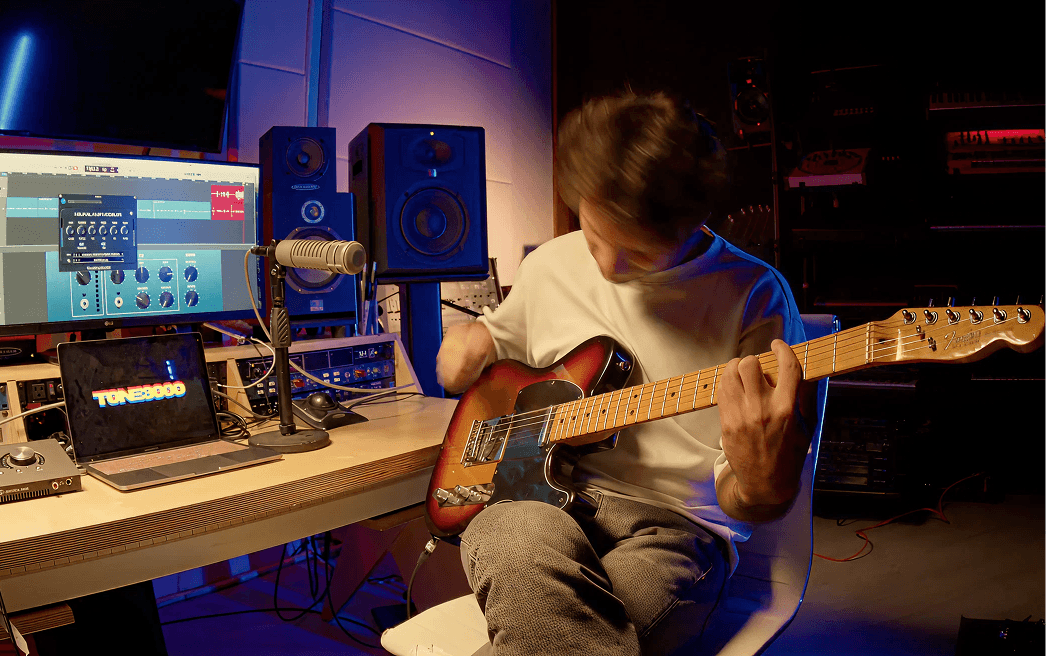
Discover hyper-realistic digital models of iconic gear, including the Fender Twin Reverb, Vox AC30, Marshall JCM 800, and thousands more. Getting started is easy—and free!