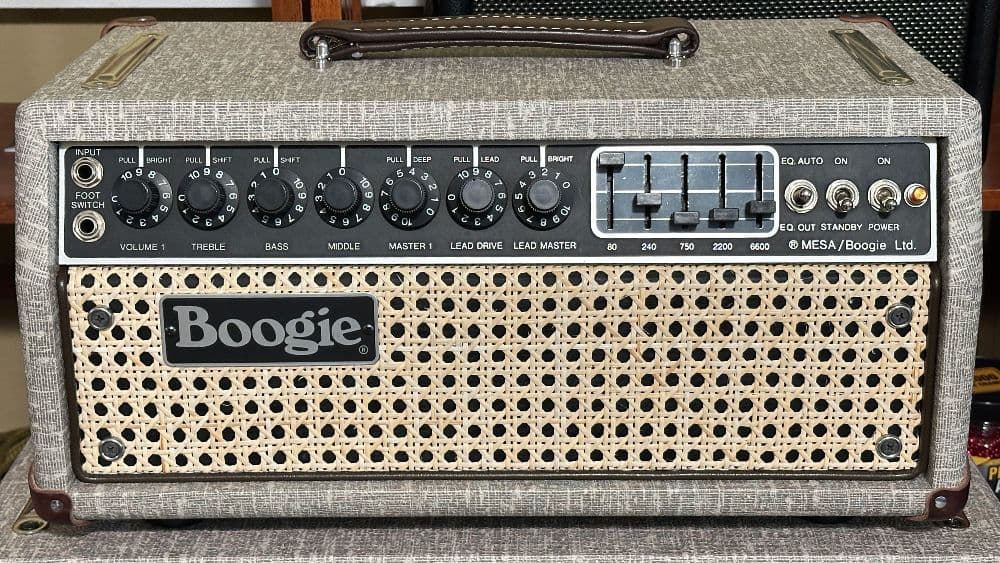
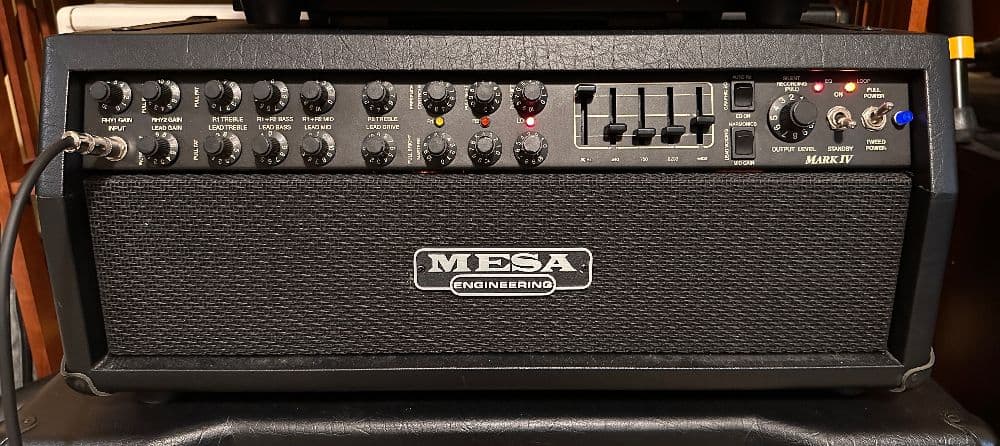
This is a community pack of one of my most prized amps. Full pack is available here:
https://ko-fi.com/s/b214b47185
Information about the full pack:
Silver Zephyr Vol. 1: "The Leads" [Updated 2 August to contain the most recent RigSculpt Workshop analytics.]
Every lead voice I chase out of my 1984 Mark IIC+, captured, measured, and calibrated.
Try before you buy: A free, trimmed-down sampler (the Artificer Pack) is on Ko-Fi (ko-fi.com/s/c1cac0523f) and bundled with my free plugin RigSculpt. Grab it, load a few, and see how they feel before you spend a cent.
What this is
66 neural amp models (or, as some say, captures or snapshots of your reamp chain), captured from my 1984 IIC+ in the DRG configuration, running the sought-after 105PT power transformer. Trained as A2 from the original audio, at 48 kHz. This is a lead amp first, and Volume 1 is built around that voice, with the clean, edge, and crunch tones that round it out.
Amp captures, no cab. There is no cabinet, microphone, or cab IR baked into these. What you get is the amp itself, including how it interacts with the load and DI chain I list below, and nothing past the amp's output. You bring the cab (see "What you need to run these").
The voice (measured, not guessed)
Across all 66 the fingerprint holds steady: a focused presence and treble lift, a firm low end reaching down to roughly 38 Hz, generous early breakup, strong bloom and sustain, and a tight, articulate chug. RigScope reads most of the set as Modern tight: cutting without turning brittle, thick without going loose. You do not have to take my word for it. It is measured and visible on every file.
What's inside (66 captures, 48 kHz)
- 3 cleans (sparkle and headroom) and 6 edge-of-breakup voices
- 3 crunch
- 44 lead voices, the heart of the pack: rhythm and chug, singing leads, and the full sweep from mid-forward to scooped, dark to bright, lean to thick
- 10 fully saturated "crush" tones
Every stage I dialed and kept, from about 18 percent drive up to the head fully cranked. A complete map of the amp, not three snapshots and not the same setting multiplied by cabs and mics.
Made for the free tools I built
RigSculpt and RigSculpt Workshop are freeware. I give them away, they are downloadable right here on my Ko-fi, and the full field guide lives at conversantsoundworks.com/rigsuite-guide.html. My hope is that this way of working with captures catches on. What it means for you: every .nam in this pack already carries a full RigScope analysis block, so the moment you drop the folder in, the library does the work you would otherwise do by hand:
- a measured EQ curve and drive/THD response you can see, not guess at
- archetype and sub-flavor tags, a sonic fingerprint, and "find similar," so 66 captures stay instantly navigable
- one-click voicing and drive matching in RigSculpt, plus amp-to-cab pairing
No spreadsheet, no re-analysis, no setup. Each file still works on its own in the original Neural Amp Modeler plugin or other NAM-compatible software. These just arrive ready to be a library you can play through, not a pile of files to dig past.
How I capture:
The load: Depending on the amp, either a real reactive speaker load into a Rupert Neve Designs DI (to my neighbors' dismay) for authentic speaker interaction, or top-tier loadboxes, mostly the RedSeven Amp Central EVO, with the Suhr Reactive Load on a few.
Calibration, not vibes, not faith: Every capture is, at bottom, a capture of a reamp chain, and mine is no exception. What sets mine apart is the lengths I go to so that chain behaves like a guitar plugged straight into the amp, as closely as I can measure it: measured, not assumed. A low ESR, the accuracy score most packs are sold on, only shows that the model matches whatever came out of the reamp chain. It says nothing about how closely that chain tracked the amp itself, and every reamp path colors the response a little, at every tier of gear. Rather than leave that gap to faith, I measure it. Before I capture, I null-test the whole path: I record a loop played straight into the amp, then run that same loop back through my full reamp chain, including the Lehle P-ISO, into the amp, and step the send in 0.2 dB increments until the two null as deeply as the setup allows, re-running to rule out measurement error. A deep null means that, for the signal and levels I test, the reamped path is not just landing at a similar volume, it is tracking the amp's response closely, coloration and all. It is not a claim of perfect transparency at every level and frequency. It is a measured floor on how far my chain strays from plugging straight in. Only then do I capture.
Reamp chain, this pack:
- Interface: RME Babyface Pro FS
- Reamp and isolation: Lehle P-ISO
- Loads used in this pack: a mix of a real reactive speaker load (through the Rupert Neve DI), the RedSeven Amp Central EVO, and the Suhr Reactive Load
- Amp: 1984 Mesa Boogie Mark IIC+ (DRG, 105PT)*
- Reamp send: dialed to the deepest null against a guitar played straight in (see "Calibration" above)
- Input calibration in each file: +13 dBu, my interface's reference level, identical across all 66
Hitting these the way I captured them:
Each file carries a +13 dBu input-calibration value. That is not a target to dial in, and it is not the voltage at the amp jack. It is simply my interface's reference level (the RME Babyface Pro FS), stored so a NAM plugin can line your rig up with mine. To match my captures, set your own interface for clean headroom, input gain at minimum so nothing clips, and run your plugin's input-calibration feature, which asks for your interface's level and corrects for the difference. RigSculpt reads the stored value and handles it for you, and the original Neural Amp Modeler plugin has a Calibration step. The point is to calibrate the difference between your rig and mine, not to copy my number.
What you need to run these:
A cabinet IR turns an amp capture into a finished tone. RigSculpt ships with cab IRs I made so you can play right away, and RigScope lets you reshape those into your own cab voicing. Prefer to source your own? There are plenty of free IRs on Tone3000. No cab is baked into these captures by design, so the speaker choice stays yours.
How to read the names:
Every file reads IIC+ | Silver Zephyr | voicing gain number, for example IIC+ | Silver Zephyr | Mid-Forward Lean Crush 001. The voicing words are measured relative to this amp's own average, so the name tells you how each capture differs from its siblings, not just a generic label.
Compatibility:
Standard .nam model files, A2 architecture, 48 kHz. Tested in the original Neural Amp Modeler plugin and in RigSculpt. They should also load in other NAM-compatible software and hardware that reads standard .nam models, though those two are the ones I have verified myself.
An honest note on what this is:
These capture my rig: the amp, yes, but also the load, the DI, the reamp chain, and the settings I chose chasing the sounds in my head. They are made to hand you my Silver Zephyr tones, faithfully, not to pretend they replace the amp itself. If you want the real head in the room, buy the amp. If you want the sounds I pulled out of mine, dialed and calibrated, they are right here. And a small handful of these also live in my free sampler (the Artificer Pack), so you may already own a few. The rest are exclusive to this volume.
About me:
I came to captures wanting to keep my favorite amp sounds without hauling the amps, and wanting to trust that what I captured was really what the amp did. Chasing both honestly is what led me to build RigScope and RigSculpt, and to give them away. I would rather ship 66 sounds you can find, see, and trust than a thousand you have to dig through.
Refunds:
These are digital downloads, available immediately, so purchases are normally non-refundable once downloaded, except where the law requires otherwise or the files turn out to be faulty or not as described. That is exactly why the free Artificer sampler exists: try it first, then decide.
About the name, the thumbnail, and trademarks:
The nickname on this pack, Silver Zephyr, is my own, not the amp's model name, and that is deliberate. It marks the distance between the amplifier itself and this product, which is a capture of my whole signal chain and settings, not the bare amp.
The amp shown in the thumbnail is rendered from a photograph I took of my own 1984 Mesa Boogie Mark IIC+, the actual head used in the reamp chain for these captures. It is there only to state, as a matter of fact, which amp was captured. Mesa/Boogie and Mark IIC+ are trademarks of their respective owners. I am not affiliated with, endorsed by, or sponsored by Mesa/Boogie, and no such association is implied.
The amp is also only one piece of any capture. A .nam is a snapshot of a whole reamp chain and a set of choices: my amp settings, dialed to my own taste with my own guitars and pickups in mind (spanning several styles, but by no means all of them), a speaker impedance load and DI box or a reactive loadbox, my interface and reamp path, and every other link in that chain. For that reason this product is in no way meant to imply that it lets you replicate the experience of owning and dialing in the amp itself. It hands you the specific sounds I pulled from my rig, not the amp.